Why Do Businesses Need Different Categories in Label Printers?
15May
In today’s business environment, speed, accuracy, and organisation matter more than ever. Whether it is a retail store, warehouse, healthcare centre, logistics company, or manufacturing facility, proper labelling helps operations run smoothly. Labels are used for pricing, shipping, inventory tracking, barcode scanning, product identification, and much more. Because every business works differently, one printer cannot meet every requirement. That is why companies often choose from different categories of label printers based on their daily needs.
From portable devices used on the move to heavy-duty systems designed for industrial environments, label printing technology has evolved to support businesses of all sizes. Understanding the differences between printer categories can help businesses improve workflow, reduce mistakes, and save valuable time.
Why Different Businesses Need Different Label Printers
Every workplace has unique printing demands. A small retail store may only need simple barcode labels for products, while a warehouse may require thousands of durable shipping labels each day. Similarly, healthcare facilities may need portable devices that print labels instantly beside patients or medications. Because of these varying requirements, businesses rely on specialised printer types that match their working conditions. Factors such as print volume, mobility, durability, connectivity, and speed all influence the choice of printer. Selecting the right category ensures smoother operations and better productivity.
Mobile Label Printers for Flexible Work Environments
Many modern businesses operate beyond traditional desks and counters. Employees often work in warehouses, delivery vehicles, stockrooms, event venues, and outdoor locations. In these situations, portability becomes extremely important. Mobile Label Printers are designed for businesses that require printing while moving around. These compact printers are lightweight, battery-powered, and easy to carry throughout the workday. Staff can print labels instantly without needing to return to a fixed workstation.
Retail businesses use them for shelf labelling and stock adjustments. Delivery companies use them for shipment tracking and receipts. Healthcare professionals use them for patient identification and specimen labelling. Their portability improves efficiency and reduces delays. Another major advantage is convenience. Employees can complete tasks directly where the work is happening instead of walking back and forth to a central printer.
How Wireless Printing Improves Business Efficiency
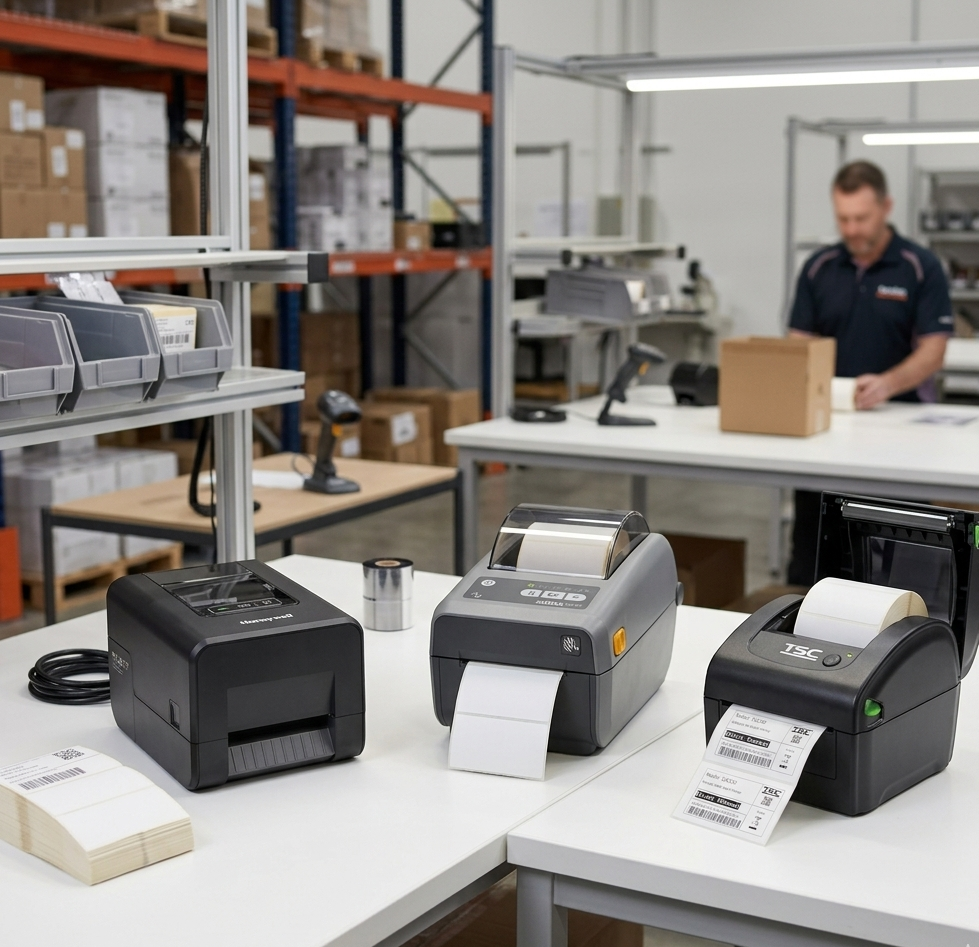
Technology has changed the way businesses connect devices and share information. Traditional cable-based setups are no longer practical for many fast-moving workplaces. This is where Wireless Label Printers become highly useful. Wireless connectivity allows printers to connect through Wi-Fi or Bluetooth, giving staff greater flexibility. Employees can print directly from tablets, smartphones, laptops, or POS systems without complicated wiring. For businesses with multiple workstations, wireless printing helps reduce clutter and improve workspace organisation. Retail stores benefit from quicker label updates, while warehouses can print labels from different locations without relocating equipment. Wireless printing also supports remote work environments and cloud-based systems, which are becoming increasingly common across industries. Many businesses prefer wireless setups because they simplify installation and make daily operations more efficient.
High-End Label Printers for Large-Scale Operations
As businesses grow, their printing needs often become more demanding. Large organisations typically require faster printing speeds, better durability, and higher print accuracy. In such cases, High End Label Printers provide the performance needed for continuous operations. These printers are built for businesses that handle high printing volumes every day. They are commonly used in manufacturing plants, distribution centres, logistics hubs, and large retail chains. One key advantage of High End Label Printers is their ability to produce sharp and professional labels consistently, even during long operating hours. They often support advanced printing functions, large media capacities, and faster processing speeds. Businesses dealing with detailed barcodes, compliance labels, or product packaging often rely on these printers for dependable performance. Durability is another important factor. High-end models are built to withstand demanding work environments while maintaining printing quality over time.
Industrial Label Printers for Tough Working Conditions
Some industries operate in harsh environments where ordinary printers may not last. Warehouses, factories, cold storage facilities, and industrial plants require equipment that can handle dust, heat, moisture, and heavy workloads. This is where Industrial Label Printers become essential. Industrial printers are specifically designed for durability and long-term use in challenging conditions. They can print large batches of labels quickly while maintaining consistent quality. These printers are commonly used for pallet labels, shipping labels, compliance tags, and inventory management. Businesses choose industrial models because downtime can lead to major operational delays. Reliable printing systems help maintain smooth workflows and accurate inventory tracking. Another important feature is media compatibility. Many industrial printers support specialised materials designed for extreme temperatures, chemicals, or outdoor use. For businesses managing large-scale supply chains, industrial-grade equipment plays a critical role in daily productivity.
Choosing the Right Label Printer for Your Business
Selecting the correct printer category depends on several factors. Businesses should first understand their operational needs before making a decision.
Here are some important questions companies often consider:
- How many labels need to be printed daily?
- Will employees need portable printing?
- Is wireless connectivity important?
- Does the workplace involve harsh industrial conditions?
- Are high-speed printing and advanced features necessary?
A small café may only require simple label printing for takeaway orders, while a logistics warehouse may need continuous high-volume printing. Matching the printer to the environment helps businesses avoid unnecessary expenses and improve efficiency.
Companies should also consider future growth. Investing in scalable printing solutions can help businesses adapt as operations expand.
The Growing Importance of Smart Label Printing
Businesses today rely heavily on automation and accurate data tracking. Labels are no longer just stickers with product names. They now support barcode scanning, inventory systems, shipping management, and customer service operations.
As industries become more technology-driven, label printers continue evolving with better speed, wireless connectivity, cloud integration, and durable printing capabilities.
Both small and large businesses benefit from choosing printers that align with their operational goals. Whether using portable solutions for mobility or industrial systems for large-scale production, the right printer improves workflow efficiency and reduces manual errors.
Comments